







Archivo de noticias y eventos
751 - 800 de un total de 2414
También puede acceder a la lista de noticias publicadas en los medios relacionadas con el Instituto de Astrofísica de Andalucía - CSIC.
Pages

|
26/11/2019 - 12:30
Inverse Compton emission revealed by observations up to TeV energies of GRB 190114C The hunt for Gamma-Ray-Bursts (GRBs) at very high energy (VHE) started more than 20 years ago. A hint of emission was already claimed by Milagrito from the observations of GRB 970417. On 19 of January the Major Atmospheric Gamma Imaging Cherenkov (MAGIC) clearly detected GRB 190114C above 0.2 TeV. This is the first highly significant detection (over 50sigma reached in the first few tens of minutes after the burst) of a GRB at VHE. GRB190114C... Dr. Elena Moretti |
|
|
23/01/2020 - 12:30
SO Colloquia: Extragalactic survey science in the 2020s: the role of radio continuum observations with the SKA Extragalactic surveys in the 2020s will reveal the full diversity of the galaxy assembly process: from environment-dependent evolution to the build-up of mass inside galaxies, and with a complete accounting of all relevant processes/constituents ensured by multi-wavelength coverage. Observations at radio wavelengths carry a unique potential in that they can probe star-formation activity and cold gas content, i.e. place constraints on both galaxy... Mark T. Sargent |
|
|
15/01/2020 - 12:30
Public Surveys and new instrumentation for Calar Alto Observatory The Calar Alto observatory (CAHA) is a key institution for the international astronomical community, for its highly competitive astronomical facilities (telescopes and instrumentation). From 2019 on, the current administration of CAHA includes the Junta de Andalucía as a new partner – replacing the Max Planck Gesellschaft -, and together with the Spanish National Research Council (CSIC) these two institutions manage the operation of the... Dr. Jesus Aceituno |
|
28/10/2019
Cinco mil ‘ojos’ para capturar los colores del cosmos El Instrumento Espectroscópico para el estudio de la Energía Oscura (DESI, por sus siglas en inglés) ha realizado hoy su primera observación de prueba |

|
31/10/2019 - 00:15
Ahora en serio: ¿hay alguien más ahí fuera? Juan Carlos Suárez |
|
23/10/2019
El IAA obtiene un Accésit del Distintivo de Igualdad del CSIC El distintivo tiene como objeto promover la perspectiva de género en el CSIC |
|
14/10/2019
Investigadores del IAA logran el catálogo de estrellas más detallado del Centro Galáctico El proyecto Galacticnucleus permitirá estudiar la población estelar que rodea al agujero negro supermasivo del Centro Galáctico con un detalle sin precedentes |
|
|
06/02/2020 - 12:30
SO Colloquia: Extrasolar planets: recent advances and future challenges Recently a group of scientists has confirmed the presence of water in the atmosphere of a super Earth orbiting in the habitable zone of its host star. But what what does this milestone represent in the search for life outside Earth? What do we mean by habitable? What do we really know about extrasolar planets, their internal structure or origins? What is a super Earth, the most common planet category know to date for which no example is found in... Dr. Juan Cabrera |
|
06/10/2019
El espejo de la misión SUNRISE, que estudiará el Sol desde un globo estratosférico, se pone a punto en Calar Alto El espejo de SUNRISE, de un metro de diámetro, se somete al proceso de aluminizado como parte de los preparativos para el próximo vuelo de la misión |
|
|
29/10/2019 - 12:30
Nebular HeII emission from spatially resolved metal-poor star-forming galaxies Nebular HeII1640,4686 emission, observed to be more frequent in high-z galaxies than locally, is indicative of far harder ionizing spectrum than that seen in nearby systems. Star-forming galaxies with lower metal content tend to have a larger nebular HeII intensities compared to those with higher metallicities. This agrees with the expected harder spectral energy distribution at the lower metallicities typical in the early universe. Theoretical... Dra. Carolina Kehrig |
|
26/09/2019
CARMENES halla un anómalo sistema planetario que desafía nuestra comprensión de cómo se forman los planetas CARMENES halla un anómalo sistema planetario que desafía nuestra comprensión de cómo se forman los planetas |
|
|
04/10/2019 - 12:30
Cúmulos Jóvenes: eclosionando, moviéndose, volando En las últimas dos décadas, nuestro conocimiento de los cúmulos estelares jóvenes, ha progresado rápidamente del uso de imágenes estáticas con cada vez mayor calidad, hacia mapas de movimientos en seis dimensiones (posiciones, velocidades), que están cambiando muchas de nuestras ideas de cómo los cúmulos estelares surgen de los complejos de nubes moleculares. Conforme nos movemos de escalas de parsecs a hectoparsecs, ahora vemos a los cúmulos... Dr. Carlos G. Román Zúñiga |
|
|
22/10/2019 - 12:30
Data mining Gaia DR2: the quest for Pre-Main Sequence Stars (and their discs) As the birth-sites of planets, protoplanetary discs have become the object of intense study during the last years. Constraining their typical lifetimes, masses and/or sizes is crucial to understand the process of planet formation. These objects are a natural by-product of early stellar evolution, and therefore a high fraction of Pre-Main Sequence Stars (PMS) are surrounded by a protoplanetary disc. The current census of PMS (and discs) has been... Dr. Héctor Cánovas |
|
19/09/2019
El agujero negro central de nuestra galaxia incrementa su actividad. El agujero negro central de nuestra galaxia incrementa su actividad. |
|
19/09/2019
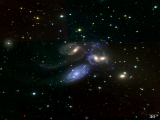
Redescubriendo el "Quinteto de Stephan" Un trabajo de investigadores del IAA-CSIC ofrece nuevos resultados sobre el "Quinteto de Stephan" uno de los sistemas compactos de galaxias más paradigmáticos. |
|
|
02/12/2019 - 12:30
Molecular outflows: evolution, structure and angular momentum We present a theoretical model in order to explain the formation and the evolution of the molecular outflows associated to protostars. In this model, we assume that the molecular outflow is a thin shell formed by the interaction between a fast stellar wind and a rotating cloud envelope in gravitational collapse. We obtain a set of partial differential equations, these equations are space and time dependent, and describe the physical properties... Dr. Alejandro López Vázquez |
|
|
23/10/2019 - 12:30
Molecular spectroscopy at high resolution for everyone Molecular observations at high resolution is being revolutionized by the success of ALMA and the upcoming advent of SKA. In this talk I will explain the recent progress in the field of molecular observations in the central regions of galaxies and the big steps that we are currently making in the use and understanding of molecular tracers as a proxy to buried physical processes in active galaxies. I will show some preliminary results from the... Dr. Sergio Martín Ruiz |
|
|
19/09/2019 - 12:30
JPAS: A survey for Galaxy Evolution studies JPAS is a survey of 5000-8000 deg2 of the sky with 56 narrow band filters in the Observatory of Javalabre. This survey is very relevant for Cosmology, Galaxy Evolution and Stellar Physics studies. In January 2020, JPAS with its JPCam will have the first light. However, the project has already taken data of 2 deg2 of the sky in two cosmological fields (AEGIS and JWST-NEP). The 2-4th of December will be the first data release (DR1) during the RIA... Dr. Rosa González Delgado |

|
10/09/2019
Vuelve la Noche Europea de L@s Investigador@s El IAA-CSIC participa un año más en La Noche Europea de L@s Investigador@s |
|
09/09/2019
El Instituto de Astrofísica de Andalucía (IAA-CSIC) recibe el distintivo de Centro de Excelencia Severo Ochoa Hoy se celebra en Madrid la entrega oficial de estos distintivos a la excelencia científica, que dotan a los centros con un millón de euros anual durante cuatro años |

|
06/09/2019
Investigadores del IAA, en los “Óscar de la ciencia” El Premio Breakthrough en Física Fundamental, dotado con tres millones de dólares, ha recaído en la colaboración internacional Telescopio Horizonte de Sucesos (EHT), que obtuvo la primera imagen de un agujero negro. Dos investigadores del Instituto de Astrofísica de Andalucía (IAA-CSIC) participan en la colaboración, que agrupa a 347 investigadores |
|
|
28/11/2019 - 12:30
SO-IAA Colloquium: Recent advances about the exoplanetary exospheres The upper atmosphere of a planet plays a key role at protecting the lower altitudes from the effects of energetic stellar EUV and soft X-ray photons and keV-energy precipitating particles. Through a variety of transport processes, the upper atmosphere also participates in the net loss of a planet’s bulk composition into space. As such, the physics and chemistry occurring in the upper atmosphere influence the evolution of a planet over its... Antonio García Muñoz |
|
15/08/2019
Una tesis sobre la cámara PANIC obtiene el premio SEA a la mejor tesis doctoral española en instrumentación PANIC es una cámara infrarroja de gran campo de visión desarrollada conjuntamente por el Max-Planck-Institut für Astronomie (MPIA) y el Instituto de Astrofísica de Andalucía (IAA-CSIC) |
|
|
07/11/2019 - 12:30
SO-IAA Colloquium: Characterization of (exo)Planetary Atmospheres Characterization of planetary atmospheres has always been a challenge. While the next generation of facilities, such as ELT, JWST, and ARIEL, will improve our understanding of planetary atmospheres, the number of well-characterized exoplanet atmospheres is expected to remain limited. Large-scale simulations assist us with this shortcoming by predicting the diversity of the planetary atmospheres, connecting the spare observational measurements,... Dr. Karan Molaverdikhani |
|
|
03/10/2019 - 12:30
Some aspects of high precision machines for astronomical applications Cranfield Precision are not specialists in astronomy but their expertise in designing and building very precise special-purpose machines has contributed to several important astronomical projects. In this talk I will show several machines with astronomical applications and select some features of particular interest for discussion. Richard May-Miller |
|
|
05/09/2019 - 12:30
Broad line AGN in the MaNGA survey This talk presents a way to find Type I Active Galactic Nuclei in the MaNGA survey (Mapping Nerby Galaxies at Apache point observatory). The method is based on flux ratios between spectral regions where a broad line in emission is expected. Likewise, the spectroscopic analysis of 44 galaxies with nuclear activity is shown; as well as the estimation of the mass of supermassive black holes and the effect that the active nucleus has on... Dra. Alenka Negrete |
|
|
17/10/2019 - 12:30
SO-IAA Colloquium: What's is the metallicity of cool dwarf stars? Cool dwarfs are the most numerous stars in the Galaxy and they account for most of its baryonic mass. However, they are likely the least understood main sequence stars. Their complex atmospheres, due to their low temperatures and high surface gravities, have made their spectroscopic study a hard task. Until recently, their basic physical properties, such as radii and mass, were poorly constrained due to the lack of empirical data. Stellar... Bárbara Rojas-Ayala |
|
27/08/2019
Se detecta una lejana colisión estelar con el brillo de los metales preciosos Se halla, en los datos de una explosión de rayos gamma de 2016, una firma que coincide con la explosión productora de oro y platino observada en luz y ondas gravitatorias en 2017. Se confirma así que los elementos pesados se producen en las kilonovas, estallidos que resultan de la fusión de dos objetos muy compactos, como estrellas de neutrones o agujeros negros |
|
|
12/09/2019 - 12:30
Detection of Exocomets: The gaseous environment of Main-Sequence Stars Planetesimals and small solid bodies in general are key to understand the chemical and dynamical evolution of planetary systems. Direct detection outside the Solar System is still not feasible. However, indirect evidences of such bodies as dusty debris disks or the presence of large amounts of gas in the close-in surroundings of main-sequence stars have been collected for over 30 years now. Transient events observed as variable non-... Dr. Isabel Rebollido |
|
31/07/2019
Observaciones de satélite y desde tierra permiten hallar un trío planetario en una estrella cercana La combinación de datos del satélite TESS con los de varios instrumentos en tierra, entre ellos CARMENES, ha permitido detectar un sistema planetario múltiple en una estrella cercana. El trabajo, en el que participa el Instituto de Astrofísica de Andalucía (IAA-CSIC), abre la puerta al estudio en detalle de sistemas planetarios múltiples |
|
|
10/10/2019 - 12:30
THE INNER DEBRIS OF SN1987A: MOLECULAR AND DUST EMISSION The supernova SN1987A in the Large Magellanic Cloud, together with new instrumentation like ALMA, offers an unprecedented opportunity to tackle fundamental issues of supernova explosions. Large masses of molecules and dust have been formed in its inner debris over the last 25 years. Recently developed tomographic techniques have allowed to obtain 3D-images of its molecular emission. Also, high-resolution images of dust emission have recently... Prof. Jon Marcaide |
|
25/07/2019
La órbita de una estrella alrededor del agujero negro supermasivo de la Vía Láctea confirma la validez de la teoría de la relatividad de Einstein La estrella S2 dibuja una elipse en torno a Sagitario A*, el agujero negro del núcleo galáctico, y su seguimiento a lo largo de veintiséis años ha permitido estudiar la gravedad en entornos extremos. Investigadores del Instituto de Astrofísica de Andalucía (IAA-CSIC) participan en los resultados, que se publican en la revista Science |
|
17/07/2019
25 aniversario del impacto del cometa Shoemaker-Levy 9 contra Júpiter Entre el 16 y el 24 de julio de 1994, el cometa Shoemaker-Levy 9 impactó contra Júpiter. Todos los observatorios del mundo estuvieron pendientes de este evento único en la historia. |
|
|
12/12/2019 - 12:30
NGC 7469 as seen by MEGARA: new results from high-resolution IFU spectroscopy In this talk I will present highlights from our recent work about the analysis of high-resolution (R ~ 20 000) GTC/MEGARA integral-field unit spectroscopic observations, obtained during the commissioning run, in the inner region (12.5arcsec×11.3arcsec) of the active galaxy NGC7469, at spatial scales of 0.62 arcsec. We explore the kinematics, dynamics, ionisation mechanisms and oxygen abundances of the ionised gas, by modelling the Hα-[NII]... Dr. Sara Cazzoli |
|
|
24/10/2019 - 12:30
ANALOGUES OF HIGH REDSHIFT GALAXIES: DISENTANGLING THE COMPLEXITY OF THE GREEN PEAS Young low-mass galaxies with extreme emission-line properties are ubiquitous at high redshift and they are believed to play a key role in cosmic reionisation and the early growth of galaxies at z>4-6. However, a detailed characterisation of their physical properties, critical for a better understanding of these two outstanding problems, is yet not possible. A unique population of lower-z analogues of these primeval systems, dubbed Green Pea (GP... Dr. Ricardo Amorin |
|
02/07/2019
Las estrellas muy masivas no se emparejan, sino que se agrupan en sistemas múltiples El proyecto MONOS, en el que participa el Instituto de Astrofísica de Andalucía (IAA-CSIC), estudia los sistemas binarios o múltiples formados por las estrellas más masivas. Emplea datos de sondeos y catálogos anteriores, así como observaciones con la cámara Astralux, instalada en el telescopio de 2.2 metros del Observatorio de Calar Alto |
|
|
14/11/2019 - 12:30
SO-IAA Colloquium: Outflows and their feedback effect in galaxies Galactic outflows are an essential component of galaxies' lifecycle. They regulate star formation and can even totally quench star formation in galaxies, hence transforming star forming galaxies into passive systems. I will review the properties of galactic outflows, their multi-phase nature, their driving mechanism, both in normal star forming galaxies and in galaxies hosting Active Galactic Nuclei, both in the local Universe and in... Dr. Roberto Maiolino |
|
|
12/11/2019 - 12:30
Study of the diversity of AGN dust models The dust component of active galactic nuclei (AGN) produces a broad infrared spectral energy distribution (SED), whose power and shape depends on the fraction of the source absorbed, and the geometry of the absorber respectively. This emitting region is expected to be concentrated within the inner ∼5 pc of the AGN which makes almost impossible to image it with the current instruments. The study the infrared SED by comparison between infrared AGN... Dr. Omaira González-Martín |

|
14/06/2019
Visitas al OSN y al IRAM 30 metros Los sábados 27 de julio, 3 y 24 de agosto. |
|
18/06/2019
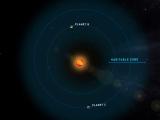
CARMENES encuentra dos planetas templados de tipo terrestre alrededor de la estrella de Teegarden, una enana roja cercana CARMENES es un espectrógrafo visible e infrarrojo que opera desde el Observatorio de Calar Alto. Investigadores del Instituto de Astrofísica de Andalucía (IAA-CSIC) participan en el hallazgo, que ha contado con datos tomados desde distintos observatorios, entre ellos el Observatorio de Sierra Nevada (OSN) |
|
27/06/2019 - 19:00
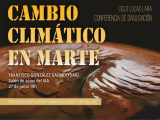
Cambio climático en Marte Conferencia de divulgación sobre la atmósfera y la variabilidad climática del planeta rojo Francisco González Galindo |

|
07/06/2019
“¡España en SKA! “: la comunidad española define sus estrategias para obtener el mayor retorno científico del radiotelescopio SKA En junio de 2018 España se convertía en el undécimo miembro de la organización del SKA, que será la mayor infraestructura científica del planeta. La próxima semana se celebra en el Instituto de Astrofísica de Andalucía (CSIC) una reunión científica para establecer sinergias que permitan aprovechar al máximo sus posibilidades |
|
06/06/2019
Los primeros datos del satélite TESS arrojan luz sobre las estrellas roAp, las pulsantes extremas Los datos de TESS han permitido hallar cinco roAp, un tipo de estrellas raras que muestra rápidas pulsaciones, intensos campos magnéticos y una composición química peculiar |
|
|
19/11/2019 - 12:30
METIS instrument: the IMAGER and the SCAO METIS is one of the three first instruments for the European Extremely Large Telescope (ELT), Europe’s next-generation ground-based telescope for optical and infrared wavelengths which is currently under construction at the ESO site at Cerro Armazones in Chile. METIS is the Mid-infrared ELT Imager and Spectrograph. This instrument will offer imaging, coronagraphy and medium-resolution spectroscopy over the full wavelength range from 3 to 14... Dr. Concepción Cárdenas |
|
|
07/10/2019 - 12:30
SO Colloquia: FPGAs in space: current experiences, future challenges and opportunities FPGAs are key components in space equipment due to their versatility and performance to implement digital functions. They are embarked in satellites and used in many applications; such as observing the earth, provide telecommunications and navigation services as well as to contribute to science and explore the wider Universe. The FPGAs face very different conditions in space compared to the terrestrial applications, especially due to the... Merodio Codinachs |
|
|
25/06/2019 - 12:30
Properties of ionized outflows in MaNGA DR2 galaxies Feedback originated from star formation and AGN activity in galaxies can have a significant impact on their evolution. The action of feedback leads to several processes that might have a significant effect on the surrounding gas, for example by heating the system, halting or enhancing star formation, or enriching the interstellar medium. Constraining the incidence and properties of feedback events such as ionized outflows is therefore crucial to... Bruno Rodríguez Del Pino |
|
|
04/06/2019 - 12:30
Correlations between the size and the stellar population properties of quiescent galaxies During the last decades, many authors have put large efforts to shed light on the mechanisms responsible of the generalized growth in size of galaxies, as well as to disentangle the main “driver” of their stellar content. In our study, we aim at stating new constraints on the mechanisms that may drive the growth in size of massive galaxies through the study of the stellar population properties of quiescent galaxies within the stellar mass-... Dr. Luis Díaz García. |

|
23/05/2019
Se celebra el congreso del programa PIIISA 2018-19 El programa, concebido en el IAA, surgió con el fin de ofrecer al alumnado granadino de secundaria una forma moderna e innovadora de aprender e interaccionar con la ciencia |
|
|
18/06/2019 - 12:30
Oxygen Line Diagnostics in X-ray spectroscopy Line diagnostics is very important to understand the physics of astronomical sources. Taking advantage of oxygen line diagnostics in X-ray spectroscopy, I will show some of our research for both the moderate-resolution the high-resolution X-ray spectra based on the newly updated atomic database (ATOMDB). I will demonstrate its power for SgrA spectrum, HII regions, and some nearby galaxies. In addition, I will introduce related space mission... Dr. Li Ji |